


In the vibrant tapestry of LGBTQ+ history, few symbols are as playful, practical, and provocative as the Hanky Code. Born out of necessity and creativity, this color-coded system allowed gay men—and later, the broader queer community—to signal their sexual interests and roles in public without saying a word. It was discreet, defiant, and deeply communal. Today, the Hanky Code stands as a relic of queer ingenuity—and maybe, just maybe, it’s time to bring it back.
A Brief History of the Hanky Code
The Hanky Code emerged in the 1970s in San Francisco’s leather and BDSM scenes, though its roots stretch back further. Some trace its origin to the Gold Rush era, when men used bandanas to signal dance roles due to a lack of female partners. But it wasn’t until queer bars and bathhouses adopted the system that it became a full-blown cultural phenomenon.
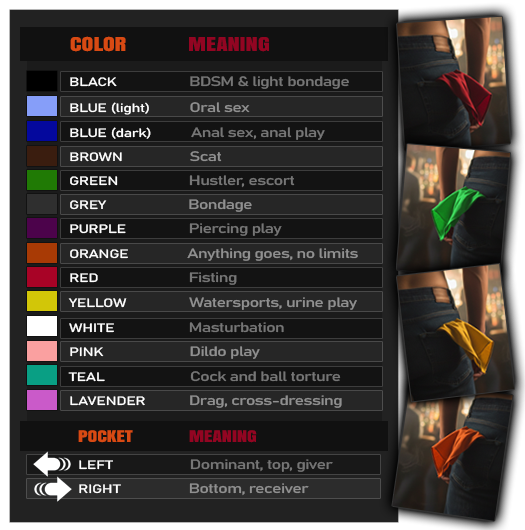
Each colored handkerchief represented a specific sexual interest or kink. Placement mattered too: worn in the left back pocket, it signaled a top/dominant role; in the right, a bottom/submissive role. This silent language allowed people to find compatible partners while navigating a world that criminalized their desires.
The Hanky Code was printed in magazines, posted on bar walls, and passed around like treasure maps. It was cheeky, coded, and deeply affirming.
Hanky Code Color Chart
Here’s a sample of the most commonly used colors and their meanings. (Note: interpretations may vary by region and era.)
Why It Mattered
The Hanky Code wasn’t just about sex—it was about safety, consent, and community. In an era before Grindr or Sniffies, it gave queer people a way to express themselves without shame. It also normalized kink and created space for nuanced identities. It was a language of liberation, spoken in cotton and color.
Are you bold enough to revive the code?
In today’s digital age, the Hanky Code may seem quaint—but its spirit is timeless. Reviving it doesn’t mean ditching apps or modern tools. It means honoring queer history, celebrating visibility, and reclaiming public space for playful, consensual expression.
So here’s the challenge: next Pride, next party, next night out—try flagging. Wear a hanky. Start a conversation. Teach someone the code. Let your pocket speak your truth.
Because queer joy is resistance. And the Hanky Code? It’s a wink to the past, and a nod to the future.
