

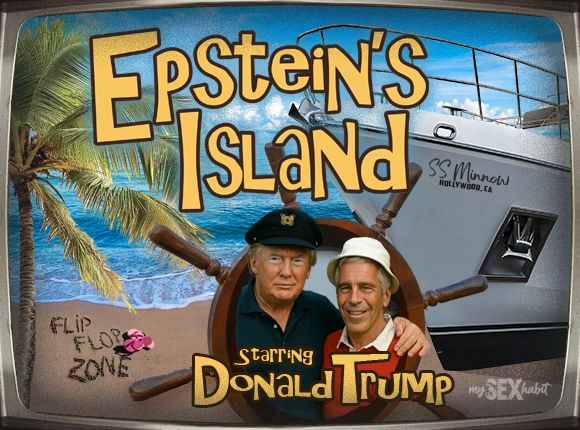
For decades, Jeffrey Epstein operated a global trafficking network that preyed on underage girls and catered to the elite. His death in 2019—officially ruled a suicide—left behind a trove of sealed documents, known as the Epstein files, rumored to contain names of powerful figures across politics, business, and entertainment. Among them: Donald Trump. 
"Epstein Island" is the widely used nickname for Little St. James, a private island in the U.S. Virgin Islands that was owned by the convicted sex offender from 1998 until his death in 2019. It is also known by other derogatory nicknames, such as "Pedophile Island.” President Trump is said to have been a frequent guest on the island.
Key Details of Epstein Island
-
- Location: The island is a small, 70 to 78-acre islet located in the Caribbean Sea, southeast of the larger island of St. Thomas.
- Purpose: According to court documents and victims' testimony, Epstein used the secluded island as a primary location for his extensive sex trafficking ring, where women and underage girls were allegedly abused by him and his associates.
- Facilities: The island featured a main compound, several villas, a private pool, a helipad, and a distinctive blue-striped, dome-topped building whose purpose was unclear and which locals referred to as a "temple."
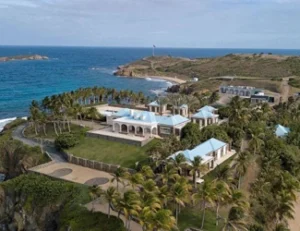


- Secrecy: Epstein maintained a high level of secrecy on the island, employing a large staff subject to strict confidentiality agreements and using helicopters and private boats (one named "The Lady Ghislaine" after his associate Ghislaine Maxwell) to transport people discreetly.
- Legal Action: After Epstein's death, the U.S. Virgin Islands government sued his estate. As part of a settlement, the proceeds from the island's sale are being used to fund support services and counseling for victims of sexual abuse and human trafficking.
- Current Status: In May 2023, billionaire Stephen Deckoff purchased Little St. James and the neighboring Great St. James (which Epstein also owned) for $60 million. He plans to transform them into a luxury resort.
Because of President Trump’s campaign promise to release the Epstein files, supports have come to question the White House’s motives since announcing the files not only would not be released, but that they in fact did not exist. Pressure has been mounting on the President and DOJ. Raising eyebrows, the President is holding unusually firm in his position. Now, in 2025, the battle to release those files has reached a boiling point in Congress. And the final vote hinges on one woman: Rep.-elect Adelita Grijalva.
The Missing Vote
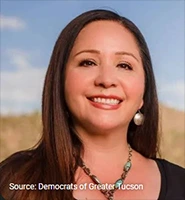 Grijalva won a special election in Arizona, pledging to be the 218th signature on a discharge petition that would force a vote to release the Epstein files. But Speaker Mike Johnson has refused to swear her in, citing the government shutdown. Critics say it’s a stall tactic—one that protects Trump, who is reportedly pressuring Johnson behind the scenes.
Arizona Attorney General Kris Mayes has filed a lawsuit to compel Johnson to seat Grijalva, arguing that 800,000 Arizonans are being disenfranchised. Survivors of Epstein’s abuse have joined the chorus, accusing Johnson of “playing politics with their pain.”
Trump’s Proximity and Panic
 Trump’s ties to Epstein are well-documented: shared parties, appearances in flight logs, and Epstein’s own claim that Trump met Melania aboard his jet. Trump reversed his promise to release the files after learning his name appears in FBI documents. His discomfort is palpable—and his influence over Johnson increasingly visible.

Ghislaine Maxwell: The Quiet Transfer
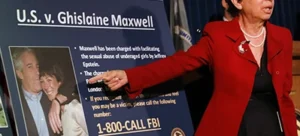 Meanwhile, Ghislaine Maxwell—Epstein’s longtime associate—was convicted of sex trafficking in 2021. In a move that stunned legal experts, she was quietly transferred in 2025 to a minimum-security federal prison camp in Texas, despite policies that typically bar sex offenders from such facilities.
The transfer followed a private meeting between Maxwell’s legal team and a top DOJ official—Trump’s former lawyer. Survivors and watchdogs have called it a “favor” and a “cover-up,” raising questions about whether Maxwell’s silence is being rewarded.
What’s at Stake
This isn’t just about one vote or one file. It’s about whether survivors will see justice, whether power can shield itself from accountability, and whether the truth will finally come to light.
The Epstein files are more than documents—they’re a reckoning. Could they be so damaging that Donald Trump and Mike Johnson are willing to allow federal workers to go unpaid and cause 42 million American families to scramble to put food on the table by extending the U.S. government shutdown? The longer Speaker Johnson delays, the louder the question becomes: What are they so afraid of?
