

While the recent wave of legislation targeting LGBTQ+ youth may seem sudden, it represents the culmination of a long-brewing movement. Conservative lawmakers have shattered records, introducing over 500 anti-LGBTQ+ bills in the United States this year alone, with many successfully being signed into law.
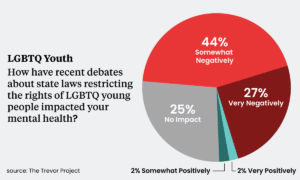
This legislative assault has tangible consequences. In 2021, Arkansas became the first state to make providing gender-affirming care to minors a felony. Since then, about half of all U.S. states have enacted laws or policies that ban or limit this type of medical care for transgender youth. 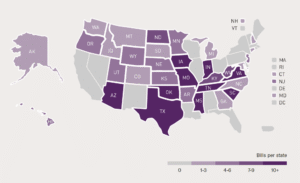 Beyond healthcare, these initiatives target the daily lives of LGBTQ+ individuals. Florida, for instance, expanded its "Don't Say Gay or Trans" law, which now restricts classroom discussions on sexual orientation and gender identity across all K-12 grades. Additionally, at least twenty-one states have passed laws restricting transgender students' participation in sports. These policies are in direct opposition to scientific evidence, which confirms that supporting LGBTQ+ youth is crucial for their health and well-being.
 To understand the current climate, Fatherly consulted with Alejandra Caraballo, a clinical instructor at Harvard Law School’s Cyberlaw Clinic. She provides a historical perspective on the legislation impacting the LGBTQ+ community, explaining the path that led to this moment and what may lie ahead.
The Historical Roots of a Movement
Where does the legal history of the anti-LGBTQ movement in the U.S. begin?
It's challenging to pinpoint a single starting point. When homophobia is deeply embedded in a society, the society itself functions as the anti-LGBTQ movement.
However, historical records show this is not a new issue. A notable case from the Jamestown colony in 1629 involved T. Hall, who was likely intersex and lived as both a man and a woman. The governor of Virginia held a court hearing to determine Hall's gender, demonstrating that questions of gender identity have long been a matter of legal debate. Transgender, queer, and intersex individuals have always been a part of society.
For centuries, there was no organized effort to reform widespread homophobia. Until 1962, sodomy was a felony in every state. In the American colonies, the punishment for sodomy was sometimes death. While records are not comprehensive, it is believed some individuals were executed for sodomy. The Supreme Court only ruled anti-sodomy laws unconstitutional in 2003.
The push for gay rights began to formalize in the mid-20th century. Events like the Compton's Cafeteria riots in San Francisco in 1966—one of the first recorded instances of militant queer resistance to police harassment—and the more widely known Stonewall riots in 1969 were pivotal. These uprisings, coupled with the rise of organizations like the Mattachine Society and the Gay Liberation Front, spurred the gay rights movement and the subsequent backlash.
The Rise of an Organized Opposition
The first coordinated anti-LGBTQ+ campaign emerged in the 1970s with singer Anita Bryant's "Save the Children" campaign in Florida. After Miami passed an ordinance protecting LGBTQ+ people, Bryant led a successful effort to repeal it by framing the community as a danger to children—a tactic that remains prevalent today.
The landscape of gender-affirming care also has a complex history. Johns Hopkins established a gender clinic in the 1960s, and nearly 100 such clinics existed at the time. However, the political climate shifted with the election of Ronald Reagan. In the 1980s, his administration labeled gender-affirming care as "experimental," leading to a ban on its federal funding that was not lifted until 2016.
The 1990s saw the institutionalization of the anti-LGBTQ+ movement. The Reagan administration's indifference to the AIDS crisis, which led to the deaths of a generation of gay men, galvanized conservative groups. Organizations like the Family Research Council and the Heritage Foundation adopted the strategies of progressive nonprofits, creating well-funded think tanks. These groups, along with others like the Alliance Defending Freedom and the Becket Fund for Religious Liberty, have worked to roll back LGBTQ+ rights and codify discrimination into law.
A Shift in Tactics: Targeting Youth
While much of this history focuses on adults, has there been a historical precedent for targeting children?
The focus on children is a recurring theme, echoing Anita Bryant's campaigns. The modern anti-trans movement shifted its focus after facing significant backlash for targeting adults. A prime example is North Carolina's 2016 "bathroom bill" (HB 2), which required people to use public restrooms corresponding to the sex on their birth certificate. The resulting economic and political fallout was immense and contributed to the Republican governor's defeat, even in a year of widespread Republican victories.
Opponents of LGBTQ+ rights realized that attacking transgender adults was difficult. They pivoted to focusing on children, particularly in the realm of sports, which is inherently a zero-sum game. This reframing allowed them to create a narrative that a trans person's gain is a cisgender person's loss, a more potent message for their base.
This strategy is supported by a small, interconnected group of medical "experts" and journalists who generate and cite each other's pseudoscientific attacks on gender-affirming care. This creates an echo chamber that gives the illusion of credibility to their anti-trans policy positions.
The Broader Agenda and a Bleak Outlook
Is the focus on trans rights a strategic entry point for broader anti-gay legislation? 
Yes. Trans people are often seen as a vulnerable segment of the LGBTQ+ community. The strategy is to isolate and strip them of their rights first, then target the lesbian, gay, and bisexual communities.
However, the agenda doesn't stop with LGBTQ+ people. The same motivations behind these bills fuel anti-abortion and anti-contraception views. The ultimate goal is to strip away bodily autonomy.
What do you see happening next?
The future appears challenging. If the current political trends continue, we could see a federal government that moves toward authoritarianism, similar to Viktor Orbán's Hungary, which has banned the discussion of LGBTQ+ topics and restricted rights.
Such a shift could weaponize federal agencies. The FDA might be used to ban or restrict access to hormones for transgender individuals, and access to IVF could be threatened. States like California and New York might serve as temporary safe havens, but federal funding can be leveraged to enforce compliance.
It is crucial to understand the potential ways the state can be weaponized. An overly optimistic view is unhelpful. It is better to be over-prepared for a worst-case scenario than to be caught underprepared in a dystopian reality.
Advice for Parents
What can parents do to prepare for the future? For families with transgender or queer children living in states that are not actively pro-LGBTQ+, making long-term plans to relocate is a consideration. In the immediate term, it's vital to connect with local ACLU chapters and keep a secure file of your child's medical records.
Visibility is also key. A significant part of the problem is a lack of awareness. When people don't understand what's happening, it's easier for these legislative attacks to succeed.
